28. March 2026
The Waiting Game: What's Really Happening Before They Let You Off the Ship
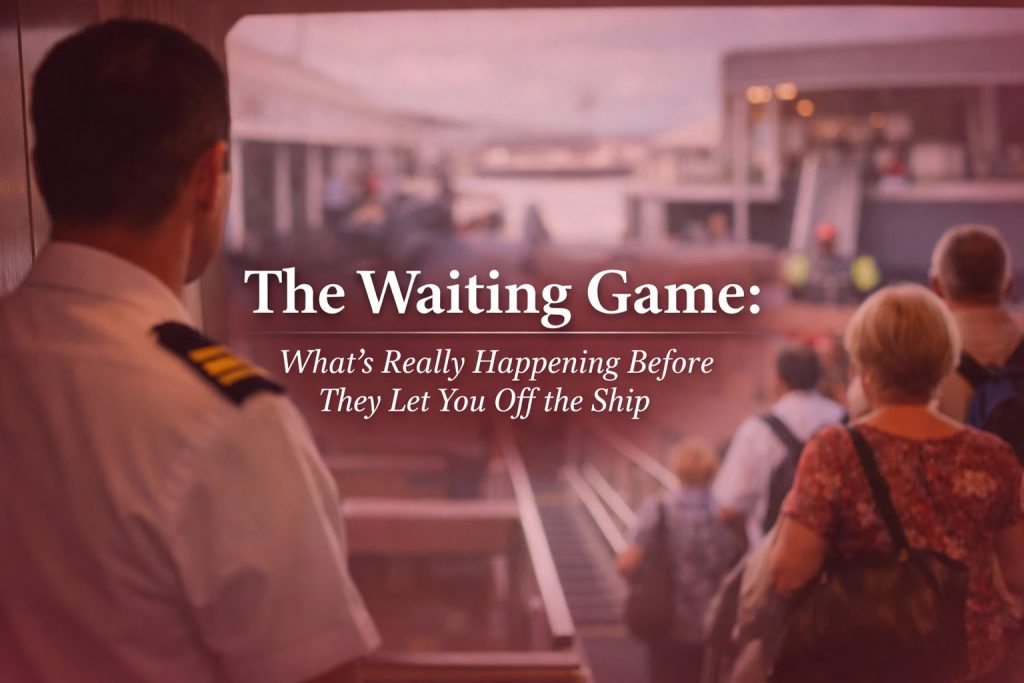
You've had an amazing week at sea. Your bags are packed and sitting outside your cabin door. The ship is literally docked at the port. You can see the terminal through your balcony window. And yet... here you sit in the Atrium lounge, listening to the same announcement for the third time: "Please remain patient. We are still awaiting clearance from customs."
Welcome to disembarkation morning, also known as "Turnaround Day" in cruise industry lingo. It's the most logistically complex day in the entire sailing, and while it feels like you're just sitting around waiting for no reason, there's actually a military-level operation happening behind the scenes.
Let's pull back the curtain on what's really going on while you're nursing that final cup of coffee.
Why You Can't Just Walk Off
First things first: just because the ship is tied to the dock doesn't mean you're free to leave. In fact, legally speaking, you're still technically in international waters until U.S. Customs and Border Protection says otherwise.
When that gangway connects to the pier, the ship isn't magically back in the United States. It's essentially a floating piece of the last foreign country you visited. Before anyone can step foot on American soil, federal officers need to board the vessel, review documentation, and officially "clear" the ship for entry into the country.
This isn't the cruise line being annoying, it's federal law. And it happens on every single sailing that returns to a U.S. port.
The CBP Officers Come to You
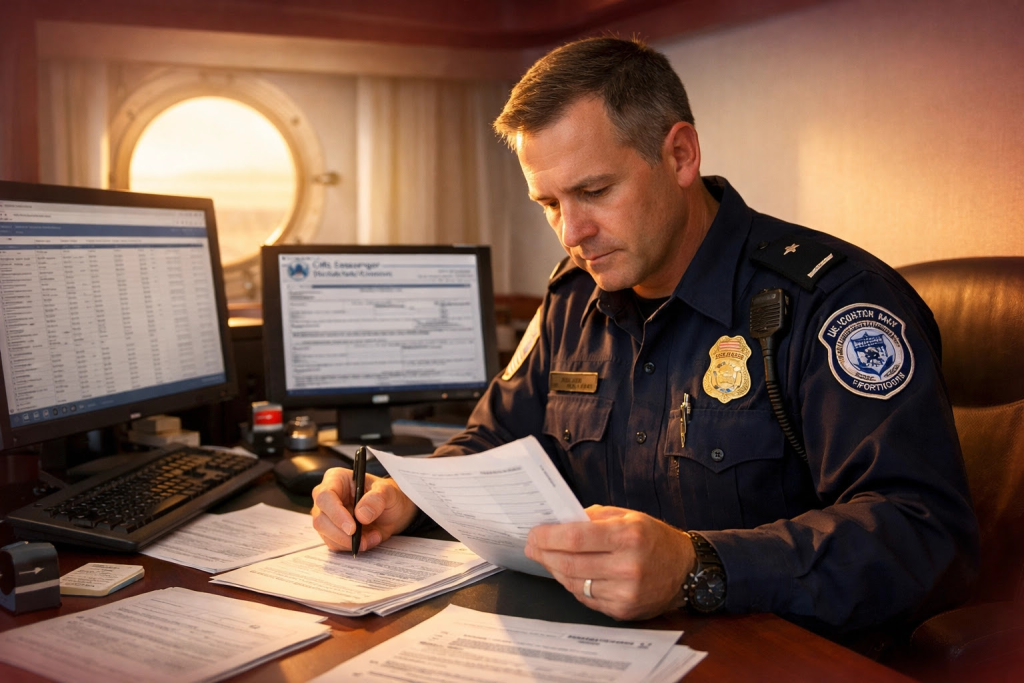
Around 6:00 or 7:00 a.m. (sometimes earlier), a team of U.S. Customs and Border Protection officers boards the ship. You won't see them, they're escorted directly to a secure office area where they set up their temporary headquarters for the morning.
These officers aren't just rubber-stamping paperwork. They're conducting a full border inspection of thousands of people without making anyone stand in line at a checkpoint. Pretty impressive when you think about it.
Here's what they're reviewing:
The Passenger Manifest: This is the master list of every single person who got on the ship and every single person who's supposed to get off. The ship's crew has been updating this document at every port of call. If someone got off in Cozumel and didn't get back on (yes, it happens), that needs to be documented and explained.
Customs Declaration Forms: Remember that form you filled out on the last night? CBP reviews those to flag anyone who declared high-value purchases or items that require additional inspection.
Security and Immigration Flags: If anyone on board has an outstanding warrant, visa issue, or raised any red flags during the sailing, CBP addresses it now, privately and discreetly, before general disembarkation begins.
This review process typically takes 1-2 hours, depending on the size of the ship and whether any issues pop up.
The "Zero Count" Requirement
Here's something most passengers don't know: before CBP will clear the ship, the crew must achieve what's called a "zero count."
What does that mean? Every single passenger must be accounted for and physically located inside the ship. Not in their cabin. Not wandering around. But confirmed to be on board in a common area waiting to disembark.
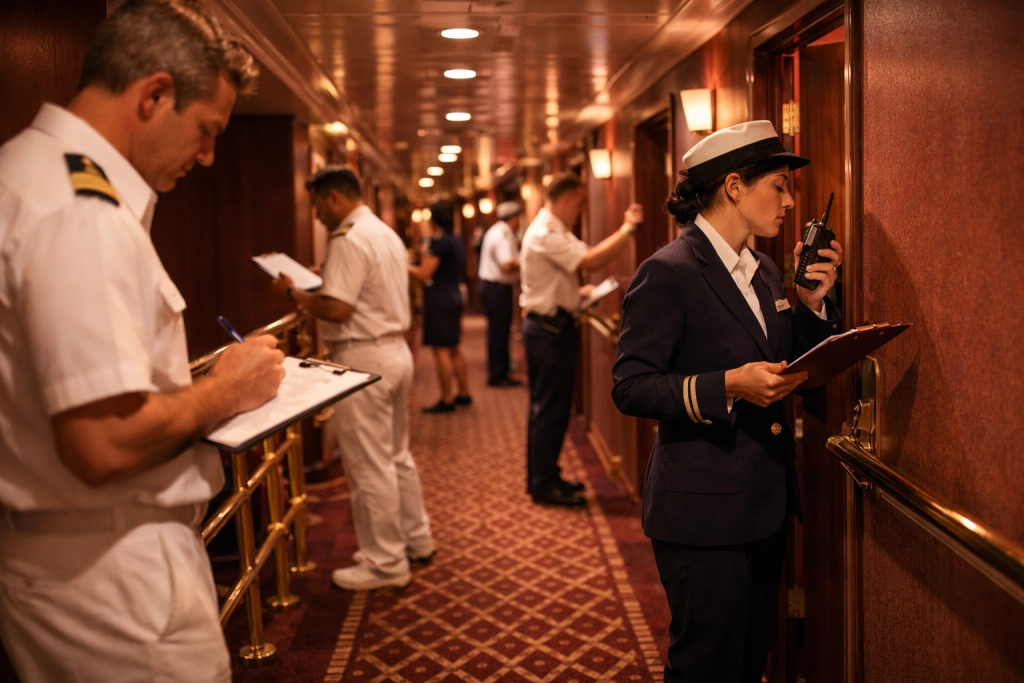
This is why crew members walk through the ship deck by deck on disembarkation morning. They're not just checking for lost luggage, they're making sure no one's still asleep in their cabin, sitting in a hot tub, or hiding out in a quiet lounge somewhere.
If the count doesn't match the manifest, if even one person is unaccounted for, disembarkation gets delayed while security sweeps the entire vessel. It's the cruise ship equivalent of a teacher taking attendance before the field trip bus can leave.
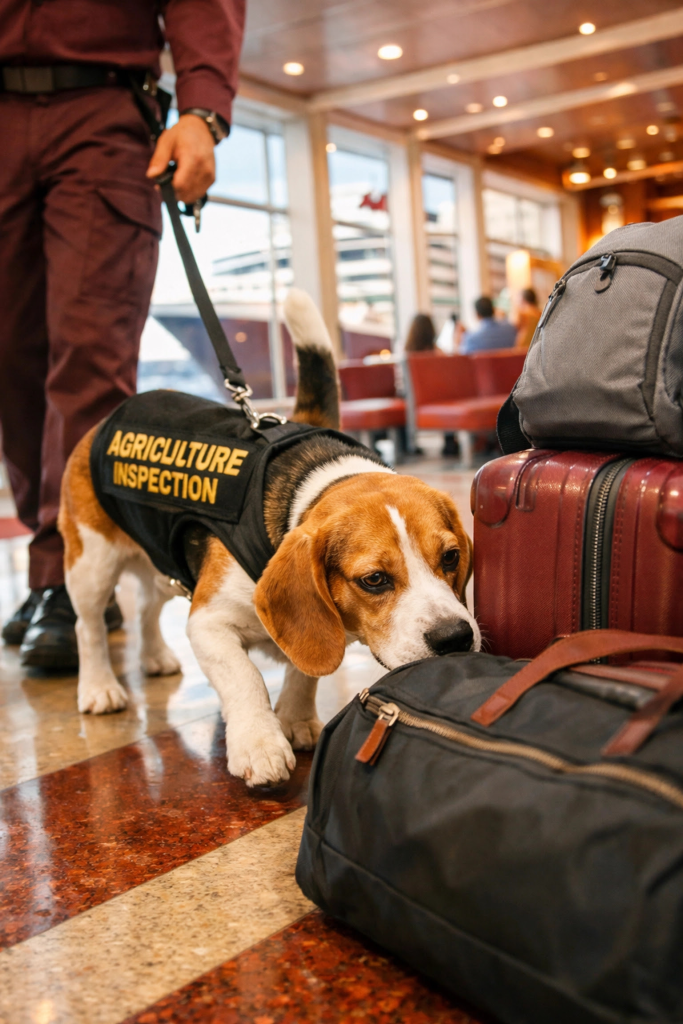
The Agricultural Inspection Team (a.k.a. The Sniffing Dogs)
Once CBP gives the initial all-clear, another team boards: agricultural inspectors with their very good boys and girls, detector dogs trained to sniff out fruits, vegetables, plants, and meat products.
Why? Because bringing certain agricultural products into the United States can introduce invasive species, plant diseases, or pests that could devastate American crops. Those banana peels you thought you'd save from breakfast? Big no-no.
These dogs are incredibly good at their jobs. They'll sweep the common areas, the buffet, and sometimes even passenger luggage if there's a concern. If they alert on something, their handler investigates immediately.
Most passengers never see this happening, the dogs usually work early in the morning before the main disembarkation begins, but it's a critical step in the clearance process.
The Great Luggage Migration
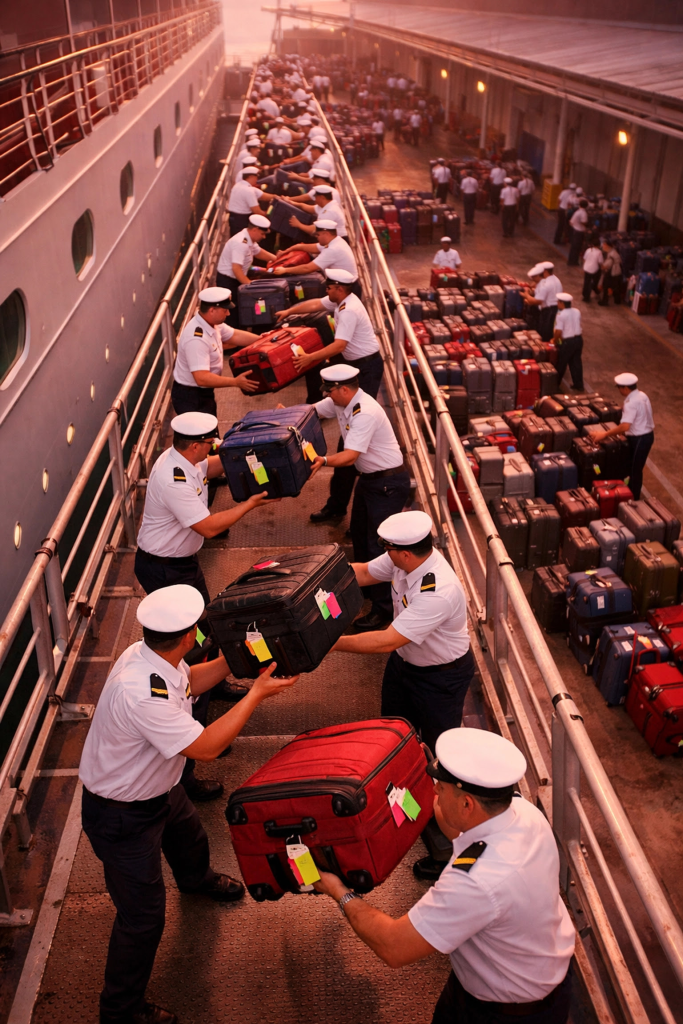
While you've been sleeping, another massive operation has been underway: moving thousands of suitcases from deep inside the ship to the cruise terminal.
You put your bags outside your cabin door by 11:00 p.m. the night before. Here's what happened to them after that:
- Collection: Crew members (often the same people who've been serving your meals all week) walk every corridor on every deck, gathering bags onto rolling carts.
- Sorting: The bags are brought to a staging area and sorted by the colored tags you attached. Each color corresponds to a specific disembarkation group and a specific section of the terminal.
- The Hold: Using service elevators and crew corridors you've never seen, the bags are transported down to the lower decks, sometimes 10+ decks down, where they're staged near the gangway doors.
- The Transfer: Once the ship is cleared and the terminal is ready, crew members form literal assembly lines, passing bags from person to person down the gangway and into the terminal building.
This process involves hundreds of crew members working through the night. By the time you're sipping your coffee in the Atrium, your suitcase has already been handled by a dozen different people.
What the Crew Is Actually Doing While You Wait
So what's happening during that frustrating hour or two when you're just... sitting there? The crew is in full-blown execution mode:
Guest Services: Reconciling final bills, processing last-minute charges, and handling anyone who still has a question about their statement.
Security: Coordinating with CBP, monitoring cameras, and ensuring the disembarkation flow remains orderly and safe.
Housekeeping: Believe it or not, they've already started cleaning. As soon as your luggage was picked up last night, the "flip crew" began deep-cleaning cabins. They have roughly 6 hours to completely turn over thousands of staterooms before new passengers board.
Food & Beverage: Serving limited breakfast while simultaneously breaking down the buffet, cleaning the restaurants, and restocking everything for the incoming guests.
Marine Operations: On the bridge, officers are already preparing for the next sailing, updating nautical charts, reviewing weather, and planning the route.
The ship literally never stops. It's a city that empties and refills in a single day.
Why Your Group Number Matters
Once CBP gives the official "all clear," you still can't just leave. Passengers are divided into color-coded or numbered groups (often based on your loyalty status, deck location, or whether you're self-carrying your bags versus waiting for the tagged luggage).
This isn't the cruise line playing favorites, it's crowd control. If 3,000 people tried to exit through the gangway at once, it would be dangerous. The system ensures a steady, manageable flow of people leaving the ship.
Express Departure (where you carry your own bags off) usually goes first because those passengers can move quickly. Then groups are called in waves, typically 15-20 minutes apart.
The actual walk-off takes about 15 minutes once your group is called. The waiting is all about timing that flow so the terminal doesn't become a chaotic mob scene.
The Final Gauntlet: The Terminal
Once you're off the ship, you still have one more stop: the official customs checkpoint inside the terminal. This is where you'll hand over your declaration form, show your passport, and (if selected) have your bags inspected.
Most people breeze through in a few minutes. But if you declared anything significant, like that expensive watch you bought in St. Maarten, you might be pulled aside for additional questions or to pay duty fees.
And just like that, you're officially back in the United States.
Why It Takes As Long As It Does
Look, nobody wants disembarkation to take 3-4 hours. Not the passengers, and definitely not the crew who've been working through the night and need to prepare for the next group of guests.
But when you're dealing with thousands of people, tons of luggage, federal regulations, and the logistical challenge of emptying and refilling a floating city in a single day? It's honestly remarkable that it happens as smoothly as it does.
So the next time you're sitting in that lounge, watching the minutes tick by, just remember: there's a small army of crew members, customs officers, and agricultural inspectors working behind the scenes to get you home safely and legally.
And hey: you've got nowhere to be but home. Might as well grab one last pastry from the buffet.