
28. March 2026
The Two-Hour Rule: Why the Ship Stops Boarding Long Before It Leaves the Pier
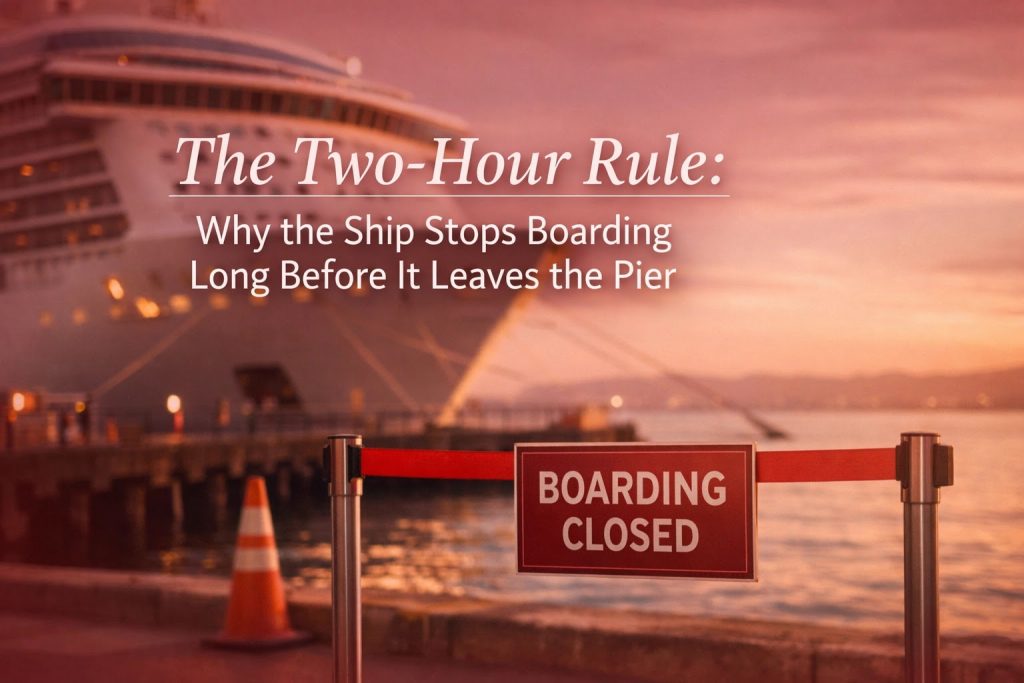
You're standing on the pier. Your ship is right there, massive, beautiful, and definitely not moving. The departure time on your cruise documents says 5:00 PM. It's only 3:15 PM. But the crew member at the gangway is shaking their head. "I'm sorry, but All Aboard time was 3:00 PM. The manifest has been submitted."
Wait... what? The ship is literally docked. You can touch it. How can you be too late when it's still going to sit there for nearly two more hours?
Welcome to the Two-Hour Rule, one of cruising's most misunderstood (and most strictly enforced) policies. Let's dive into why that "All Aboard" time isn't just a suggestion, and what's really happening during those final hours before your ship leaves port.
The Government Mandate You Didn't Know About
Here's the thing most cruisers don't realize: that early boarding cutoff isn't about the cruise line being strict or trying to stress you out. It's actually a federal requirement.
U.S. Customs and Border Protection (CBP) and port authorities require cruise lines to submit their final departure manifest at least 60 minutes before sailing. Some ports require even more time. This manifest is an official government document that lists every single person aboard the vessel, passengers, crew members, and staff. It includes passport information, citizenship status, medical declarations, and emergency contact details.
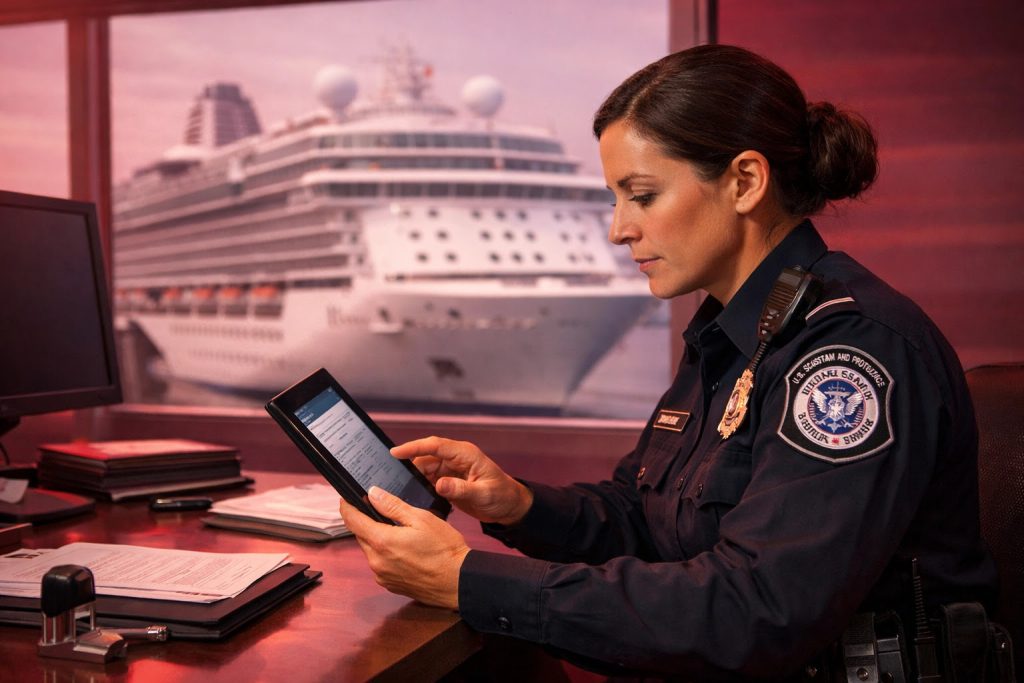
Once that manifest is electronically submitted and accepted by CBP, it's locked. No additions. No changes. No "but they're literally running down the pier right now" exceptions. The ship's passenger list is now a legal document that matches exactly who the government expects to be aboard when that vessel leaves U.S. waters.
If you're not checked in and physically on the ship before that manifest goes out? You're legally not a passenger on that voyage. Even if you're standing ten feet away watching it happen.
The 60-90-120 Minute Window
Most major cruise lines operate on different versions of the same basic timeline:
- Norwegian Cruise Line: All Aboard is 60 minutes before departure
- Royal Caribbean: All Aboard is 90 minutes before departure
- Carnival, Princess, and others: All Aboard is typically 120 minutes (2 hours) before departure
These aren't arbitrary numbers. They're calculated backward from the regulatory requirement. The cruise line needs to finalize the passenger count, reconcile anyone who boarded versus anyone who checked in but never showed up, process all the data, run security checks against watch lists, and submit everything with enough cushion that if there's a technical glitch or a question from authorities, they still meet that 60-minute hard deadline.
Your ship isn't leaving at 3:00 PM, but your window to board closes then. Big difference.
What's Really Happening During Those Final Hours
So what exactly is the crew doing during that gap between All Aboard and actual departure? Spoiler alert: it's a lot more than just waiting around.
The Bridge Comes Alive
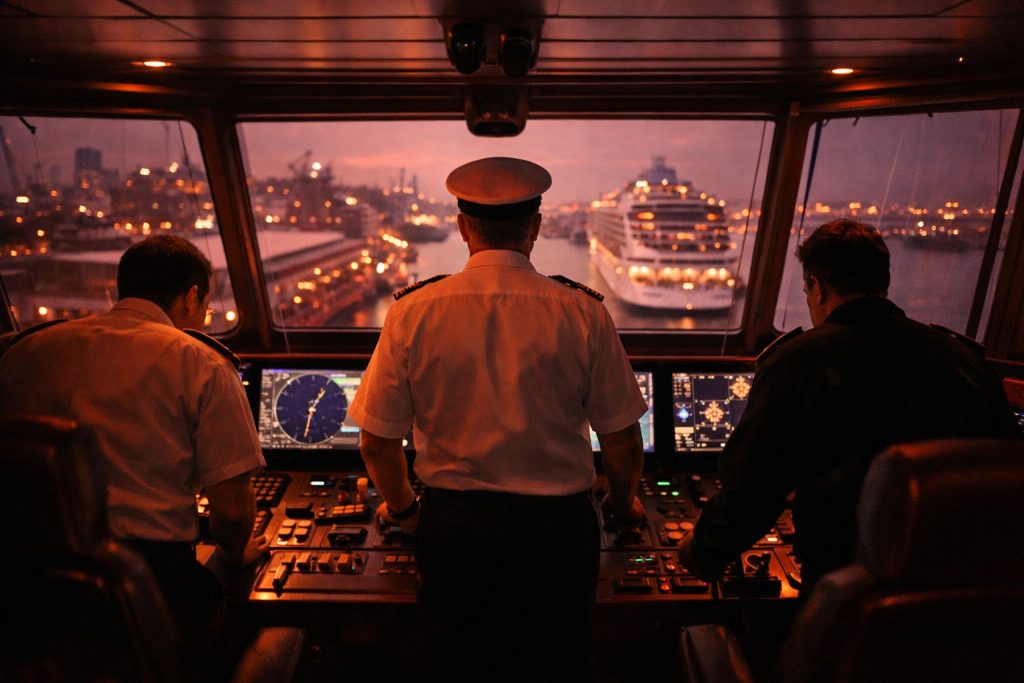
About two hours before departure, the bridge team begins serious work. The Captain and officers review the navigation plan, check weather updates, confirm the departure sequence, and start communication protocols with port authorities and the harbor pilot.
They're testing navigation systems, verifying GPS coordinates, checking radar and communication equipment. Everything needs to be operational and triple-checked before they're cleared to leave.
Engine Room Preparations
Down in the engine room, the engineering team is running pre-departure tests. They're firing up main engines (if they've been in standby mode), testing steering mechanisms, checking propulsion systems, and monitoring power loads as various ship systems ramp up for sea.
Modern cruise ships have incredibly complex engine systems, sometimes running on multiple fuel types, with backup systems and redundant controls. All of this gets tested and logged before departure.
Securing the Gangway and Ship Doors
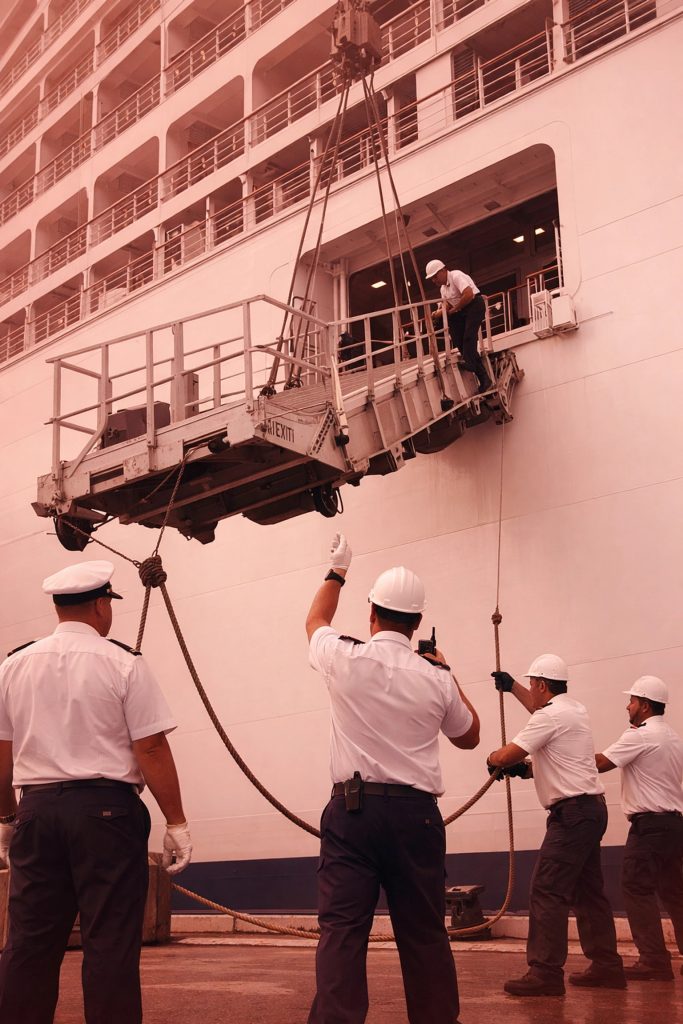
The gangway, that bridge between ship and shore, can't just be yanked up at the last second. It's a multi-ton piece of equipment that needs to be properly detached, stowed, and secured. Shore-side doors and portals need to be sealed. Crew members do final walkthroughs of accessible deck areas to ensure no passengers are still disembarking (yes, this happens: someone always thinks they have time for one more quick trip to the terminal gift shop).
The Passenger Count Reconciliation
This is where things get interesting. The ship's crew has to reconcile their records. They know how many people checked in. They know how many people scanned their cards to physically board. But do those numbers match?
Someone who checked in online might have never shown up. Someone might have had a medical emergency in the terminal. Someone might have decided at the last minute not to sail. Every discrepancy has to be investigated, confirmed, and documented before that final manifest can be submitted.
Security teams review camera footage. Guest services contacts the cabin to see if there's a response. Did the person's luggage get delivered to their room? If so, where are they? This detective work takes time.

Shore-Side Final Communications
The ship is in constant communication during this time with:
- Port authorities coordinating departure clearance
- CBP reviewing and approving the manifest
- The harbor pilot coordinating arrival time
- Fuel and provision suppliers confirming final deliveries
- Local emergency services (standard protocol)
- The ship's corporate office
All of these parties need confirmation that the ship is ready and cleared to depart.
The Harbor Pilot Arrives
In most ports, ships can't just drive themselves out. A local harbor pilot: an expert in that specific port's waterways, currents, and hazards: boards the ship and takes navigational control until the vessel reaches open water.
The pilot typically arrives 30-60 minutes before departure. They need time to meet with the Captain, review the departure plan, and get positioned on the bridge before the ship can even think about moving.
Why All Aboard Time Is Non-Negotiable
Let's say you miss the cutoff by five minutes. The crew can see you on the pier. You're right there. Why can't they just let you on?
Because the manifest has been submitted. As far as the U.S. government is concerned, you are not on that ship. If the cruise line were to allow you to board at that point, they would be:
- Violating federal regulations by having an undocumented passenger aboard
- Sailing with a passenger manifest that doesn't match reality
- Potentially facing massive fines from CBP
- Risking their port agreements and operating privileges
No cruise line is going to risk their entire operation for one late passenger. It's not personal: it's legal.Shore-Side Final Communications
The ship is in constant communication during this time with:
- Port authorities coordinating departure clearance
- CBP reviewing and approving the manifest
- The harbor pilot coordinating arrival time
- Fuel and provision suppliers confirming final deliveries
- Local emergency services (standard protocol)
- The ship's corporate office
All of these parties need confirmation that the ship is ready and cleared to depart.
The Harbor Pilot Arrives
In most ports, ships can't just drive themselves out. A local harbor pilot: an expert in that specific port's waterways, currents, and hazards: boards the ship and takes navigational control until the vessel reaches open water.
The pilot typically arrives 30-60 minutes before departure. They need time to meet with the Captain, review the departure plan, and get positioned on the bridge before the ship can even think about moving.
Why All Aboard Time Is Non-Negotiable
Let's say you miss the cutoff by five minutes. The crew can see you on the pier. You're right there. Why can't they just let you on?
Because the manifest has been submitted. As far as the U.S. government is concerned, you are not on that ship. If the cruise line were to allow you to board at that point, they would be:
- Violating federal regulations by having an undocumented passenger aboard
- Sailing with a passenger manifest that doesn't match reality
- Potentially facing massive fines from CBP
- Risking their port agreements and operating privileges
No cruise line is going to risk their entire operation for one late passenger. It's not personal: it's legal.
What Happens If You Miss It
If you arrive after All Aboard time, you will not be allowed to board. Period. The cruise line's responsibility to you ends at that moment.
You're now responsible for:
- Getting yourself to the next port of call (flights, hotels, ground transportation)
- Any visa or documentation requirements for that country
- Rejoining the ship at your own expense (if they even allow it)
- Any costs associated with your missed vacation
Most cruise lines will not offer refunds or compensation if you miss All Aboard time. It's written into the cruise contract you agreed to when you booked.
Some comprehensive travel insurance policies cover "missed departure" if it's due to a covered reason (like a flight delay), but you'll need documentation and it's still a headache.
The Bottom Line
That two-hour window before departure isn't empty time: it's a carefully choreographed sequence of legal, technical, and operational requirements that ensure your ship can legally and safely leave port.
When your cruise documents say "All Aboard: 3:00 PM" and "Departure: 5:00 PM," those are two completely different events. One is your deadline. The other is when the ship actually moves.
Treat your All Aboard time like a flight departure time: because functionally, it is. You wouldn't show up to the airport gate after the plane door closes and expect them to reopen it. The same logic applies here.
Build in buffer time. Assume traffic will be terrible. Plan to be at the terminal early. Because once that manifest goes to CBP, your cruise becomes a very expensive shore excursion that you're watching from the pier.
The ship will leave on time. The only question is whether you'll be on it.