
28. March 2026
"I'm Not Leaving!": Understanding Post-Cruise Blues and the Viral Disembarkation Refusal
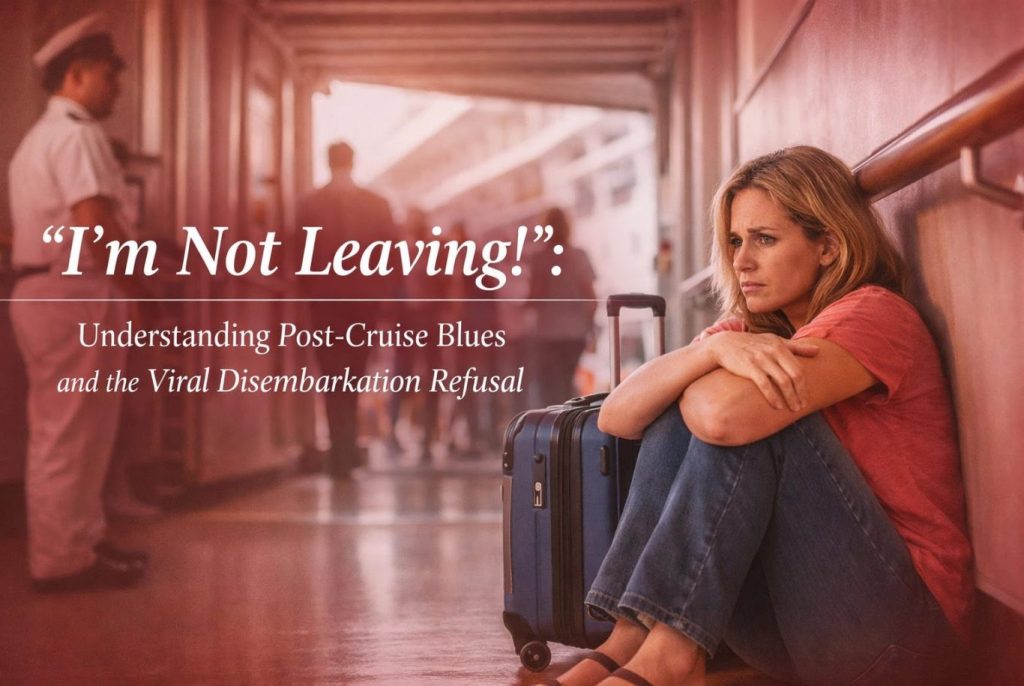
We've all seen those viral moments that make us do a double-take. Recently, a story out of Florida had the internet buzzing: a cruise passenger refused to leave the ship after docking, leading to his arrest and sparking conversations about something called "PDAD."
Was he just being difficult? Was it a medical emergency? Or was something deeper going on?
Turns out, the transition from ship to shore is way more complicated than most people realize, and for some cruisers, stepping back onto solid ground feels genuinely impossible.
When Paradise Ends: The Psychological Crash After a Cruise
Picture this: You've spent a week (or longer) in a floating bubble of relaxation. No emails. No deadlines. No cooking or cleaning. Someone makes your bed, brings you fresh towels, and serves you tropical drinks by the pool. You've got ocean views 24/7, new friends from the trivia night, and a routine that consists of eating, sleeping, and deciding whether to hit the waterslide or the hot tub.
Then, bam, you're back in the real world. Back to traffic, bills, work stress, and a fridge full of expired leftovers.

For many people, the end of a cruise isn't just sad, it's jarring. Psychologists sometimes refer to this as the "vacation comedown," but for cruise passengers, it can hit especially hard because of the unique, all-inclusive environment ships create. You're not just leaving a hotel; you're leaving a self-contained world where everything was taken care of for you.
And for a small percentage of cruisers? That transition becomes physically and emotionally overwhelming.
What Is PDAD (And No, It's Not Just Being Dramatic)
Post Disembarkation Adjustment Disorder (PDAD) isn't an official clinical diagnosis (yet). Still, it's a term that's gained traction in cruise communities to describe the very real emotional and psychological struggle some passengers experience after leaving a ship.
Symptoms can include:
- Deep sadness or depression
- Feeling disconnected from your daily life
- Irritability or mood swings
- Difficulty readjusting to routines
- Obsessively looking at photos or reliving cruise memories
- Immediately booking another cruise to "fix" the feeling
Sound familiar? You're not alone. Some frequent cruisers describe it as a mild grief: mourning the loss of that carefree state of mind. Others say it feels like waking up from a really good dream, only to realize you have to go to work in 20 minutes.
PDAD tends to hit hardest for people who:
- Had a particularly transformative or relaxing cruise experience
- Are returning to high-stress home or work situations
- Struggle with anxiety or depression in their daily lives
- Went on a longer cruise (10+ days)
The good news? It's temporary. The less-good news? It can feel pretty awful while you're in it.
MdDS: When Your Body Refuses to Believe You're on Land
Here's where things get really interesting, and a bit more medical.
Mal de Debarquement Syndrome (MdDS) is a legitimate vestibular disorder that causes persistent sensations of rocking, swaying, or bobbing after you've stepped off a moving vessel. Unlike typical "sea legs" (which usually resolve within a day or two), MdDS can last for weeks, months, or in rare cases, even longer.
People with MDDS often describe it as feeling like:
The ground is still moving beneath them
They're constantly on a boat, even in their own living room
Walking on a trampoline or a waterbed
Difficulty focusing or experiencing brain fog

The condition is poorly understood, but researchers believe it involves a miscommunication between the brain's balance centers and the inner ear. Essentially, your brain got so good at compensating for the ship's motion that it forgot how to process stillness.
MdDS is more common in women and can be triggered by cruises, flights, car trips, or even train rides. While most cases resolve on their own, some people require physical therapy, vestibular rehabilitation, or medications to manage symptoms.
If you're feeling dizzy or "sea-legged" for more than 72 hours after disembarking, it's worth talking to a doctor, especially if it's impacting your ability to drive or work safely.
5 Practical Tips for a 'Soft Landing' After Your Cruise
Whether you're dealing with mild post-cruise blues or full-blown adjustment struggles, here are some strategies to ease the transition back to reality:
1. Don't Rush Back Into Everything
If possible, give yourself a buffer day between disembarkation and returning to work. Use that time to unpack slowly, do laundry, restock groceries, and ease back into your routine. Think of it as a decompression chamber for your brain.
2. Keep Some Vacation Vibes Alive
Recreate little moments from the cruise at home. Make yourself a fancy coffee in the morning. Play tropical music while you cook dinner. Wear your cruise t-shirt on a random Tuesday. These small touchpoints can soften the emotional drop-off.
3. Stay Hydrated and Get Moving
Post-cruise fatigue is real, and it's often made worse by dehydration and irregular sleep schedules. Drink plenty of water, get some sunlight, and take a walk to help reset your circadian rhythm. Gentle movement can also help with lingering dizziness or balance issues.
4. Talk About It (Seriously)
Don't bottle up those feelings. Talk to your travel companions, share photos with friends, or post in online cruise forums. Connecting with people who get it can be surprisingly therapeutic, and you might be surprised how many others are feeling the same way.
5. Plan Your Next Adventure
You don't have to book another cruise tomorrow, but having something to look forward to, even if it's a weekend road trip or a concert three months from now, gives your brain a positive future focus. It helps bridge the gap between "vacation mode" and "regular life mode."
The Final Leg of Your Journey: Getting Home Without the Stress
Here's the thing nobody talks about: The drive home from the port can be one of the most stressful parts of the entire trip.
You're tired. You're emotionally drained. You might be dealing with sea legs or post-cruise brain fog. You've got luggage, souvenirs, and maybe kids who are cranky and overstimulated. The last thing you want to do is navigate traffic, figure out parking, or worry about whether you're safe to drive.

"I'm Not Leaving!": Understanding Post-Cruise Blues and the Viral Disembarkation Refusal
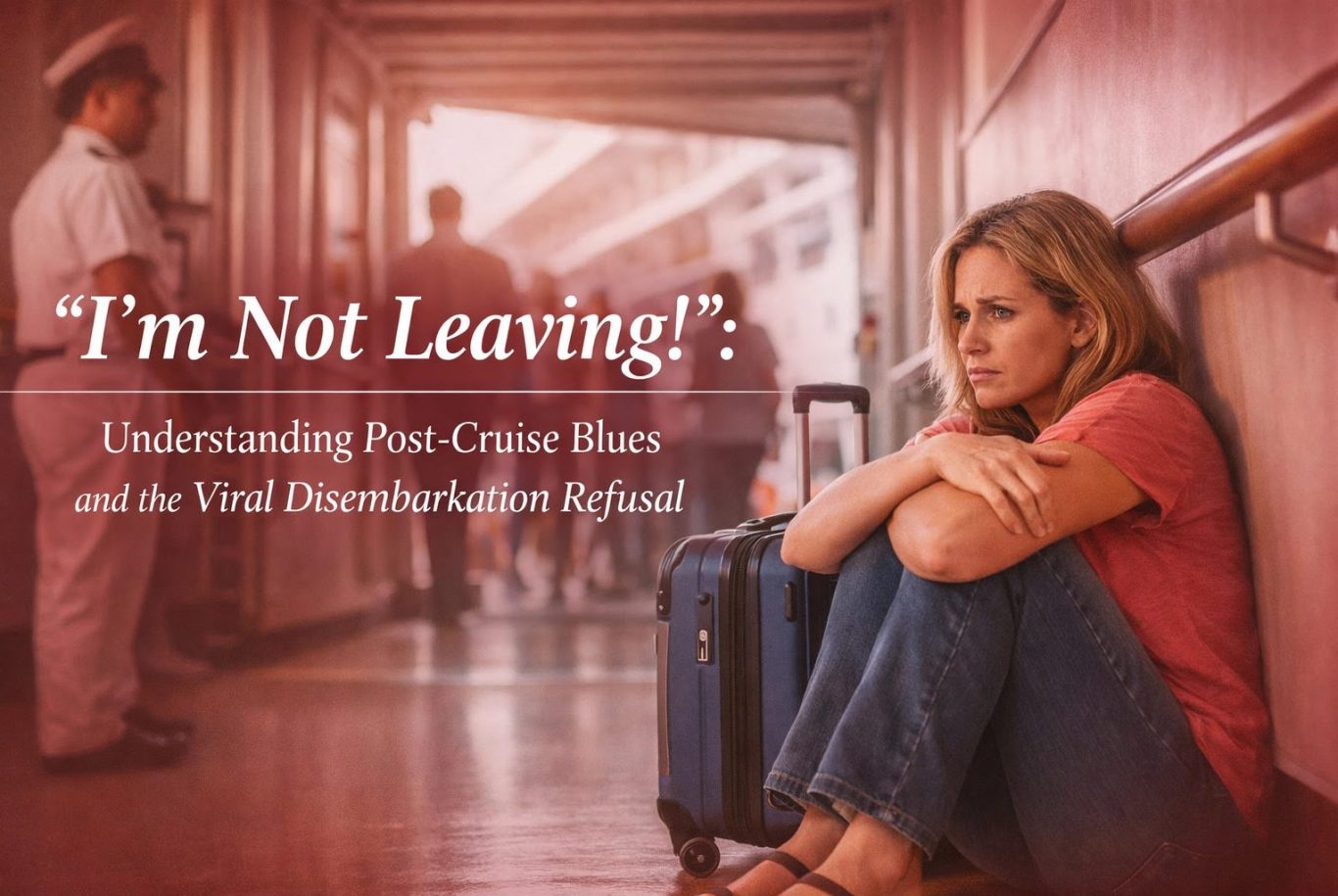
We've all seen those viral moments that make us do a double-take. Recently, a story out of Florida had the internet buzzing: a cruise passenger refused to leave the ship after docking, leading to his arrest and sparking conversations about something called "PDAD."
Was he just being difficult? Was it a medical emergency? Or was something deeper going on?
Turns out, the transition from ship to shore is way more complicated than most people realize, and for some cruisers, stepping back onto solid ground feels genuinely impossible.
When Paradise Ends: The Psychological Crash After a Cruise
Picture this: You've spent a week (or longer) in a floating bubble of relaxation. No emails. No deadlines. No cooking or cleaning. Someone makes your bed, brings you fresh towels, and serves you tropical drinks by the pool. You've got ocean views 24/7, new friends from the trivia night, and a routine that consists of eating, sleeping, and deciding whether to hit the waterslide or the hot tub.
Then, bam, you're back in the real world. Back to traffic, bills, work stress, and a fridge full of expired leftovers.

For many people, the end of a cruise isn't just sad, it's jarring. Psychologists sometimes refer to this as the "vacation comedown," but for cruise passengers, it can hit especially hard because of the unique, all-inclusive environment ships create. You're not just leaving a hotel; you're leaving a self-contained world where everything was taken care of for you.
And for a small percentage of cruisers? That transition becomes physically and emotionally overwhelming.
What Is PDAD (And No, It's Not Just Being Dramatic)
Post Disembarkation Adjustment Disorder (PDAD) isn't an official clinical diagnosis (yet). Still, it's a term that's gained traction in cruise communities to describe the very real emotional and psychological struggle some passengers experience after leaving a ship.
Symptoms can include:
- Deep sadness or depression
- Feeling disconnected from your daily life
- Irritability or mood swings
- Difficulty readjusting to routines
- Obsessively looking at photos or reliving cruise memories
- Immediately booking another cruise to "fix" the feeling
Sound familiar? You're not alone. Some frequent cruisers describe it as a mild grief: mourning the loss of that carefree state of mind. Others say it feels like waking up from a really good dream, only to realize you have to go to work in 20 minutes.
PDAD tends to hit hardest for people who:
- Had a particularly transformative or relaxing cruise experience
- Are returning to high-stress home or work situations
- Struggle with anxiety or depression in their daily lives
- Went on a longer cruise (10+ days)
The good news? It's temporary. The less-good news? It can feel pretty awful while you're in it.
MdDS: When Your Body Refuses to Believe You're on Land
Here's where things get really interesting, and a bit more medical.
Mal de Debarquement Syndrome (MdDS) is a legitimate vestibular disorder that causes persistent sensations of rocking, swaying, or bobbing after you've stepped off a moving vessel. Unlike typical "sea legs" (which usually resolve within a day or two), MdDS can last for weeks, months, or in rare cases, even longer.
People with MDDS often describe it as feeling like:
- The ground is still moving beneath them
- They're constantly on a boat, even in their own living room
- Walking on a trampoline or a waterbed
- Difficulty focusing or experiencing brain fog

The condition is poorly understood, but researchers believe it involves a miscommunication between the brain's balance centers and the inner ear. Essentially, your brain got so good at compensating for the ship's motion that it forgot how to process stillness.
MdDS is more common in women and can be triggered by cruises, flights, car trips, or even train rides. While most cases resolve on their own, some people require physical therapy, vestibular rehabilitation, or medications to manage symptoms.
If you're feeling dizzy or "sea-legged" for more than 72 hours after disembarking, it's worth talking to a doctor, especially if it's impacting your ability to drive or work safely.
5 Practical Tips for a 'Soft Landing' After Your Cruise
Whether you're dealing with mild post-cruise blues or full-blown adjustment struggles, here are some strategies to ease the transition back to reality:
1. Don't Rush Back Into Everything
If possible, give yourself a buffer day between disembarkation and returning to work. Use that time to unpack slowly, do laundry, restock groceries, and ease back into your routine. Think of it as a decompression chamber for your brain.
2. Keep Some Vacation Vibes Alive
Recreate little moments from the cruise at home. Make yourself a fancy coffee in the morning. Play tropical music while you cook dinner. Wear your cruise t-shirt on a random Tuesday. These small touchpoints can soften the emotional drop-off.
3. Stay Hydrated and Get Moving
Post-cruise fatigue is real, and it's often made worse by dehydration and irregular sleep schedules. Drink plenty of water, get some sunlight, and take a walk to help reset your circadian rhythm. Gentle movement can also help with lingering dizziness or balance issues.
4. Talk About It (Seriously)
Don't bottle up those feelings. Talk to your travel companions, share photos with friends, or post in online cruise forums. Connecting with people who get it can be surprisingly therapeutic, and you might be surprised how many others are feeling the same way.
5. Plan Your Next Adventure
You don't have to book another cruise tomorrow, but having something to look forward to, even if it's a weekend road trip or a concert three months from now, gives your brain a positive future focus. It helps bridge the gap between "vacation mode" and "regular life mode."
The Final Leg of Your Journey: Getting Home Without the Stress
Here's the thing nobody talks about: The drive home from the port can be one of the most stressful parts of the entire trip.
You're tired. You're emotionally drained. You might be dealing with sea legs or post-cruise brain fog. You've got luggage, souvenirs, and maybe kids who are cranky and overstimulated. The last thing you want to do is navigate traffic, figure out parking, or worry about whether you're safe to drive.

That's where Helping Hands Shuttle Service comes in.
Whether you're disembarking at the Long Beach cruise terminal and need a reliable shuttle to Long Beach cruise terminal for your return trip, or you're catching a flight home and need an LAX to Long Beach shuttle, we make that final transition stress-free.
Our shuttle service means:
- No driving while "sea-legged": Let someone else handle the road while you decompress
- Door-to-door service: We pick you up right at the terminal and drop you wherever you need to go
- Luggage assistance: No struggling with heavy bags after a long journey
- Flexible scheduling: Early morning disembarkation? Late arrival? We've got you covered
- Affordable, transparent pricing: No surprise fees or surge pricing when you're exhausted
Our Long Beach shuttle service is designed specifically for cruisers and travelers who want a smooth, comfortable ride home. Think of us as the bridge between vacation-you and real-life-you: we'll get you there safely so you can focus on processing all those amazing memories (or just taking a nap).
You're Not "Difficult": You're Human
So, back to that viral story: Was the guy who refused to leave the ship being unreasonable? Maybe. But was he also experiencing something real and overwhelming? Almost certainly.
Post-cruise blues, PDAD, and MdDS are all part of a larger conversation about how our brains and bodies handle transitions, especially when those transitions involve going from extreme relaxation back to everyday stress.
If you've ever felt that pang of sadness watching your cruise ship pull away, or spent the first few days home feeling weirdly disconnected, you're not alone. And you're definitely not being dramatic.
Give yourself grace. Take it slow. And next time you're planning a cruise, remember: The journey home is just as important as the journey to the ship.
Ready to book your stress-free ride home? Visit Helping Hands Shuttle Service or check out our online booking to reserve your spot. Because the best way to end a great vacation? Knowing someone else has the "getting home" part covered.